
There was a time when a truck accident came down to two versions of the same story. The driver said one thing. The victim said another. Without witnesses or physical evidence to fill in the gaps, cases often stalled, settled for less than they were worth, or ended in frustrating disputes over who was really at fault.
That time is largely over.
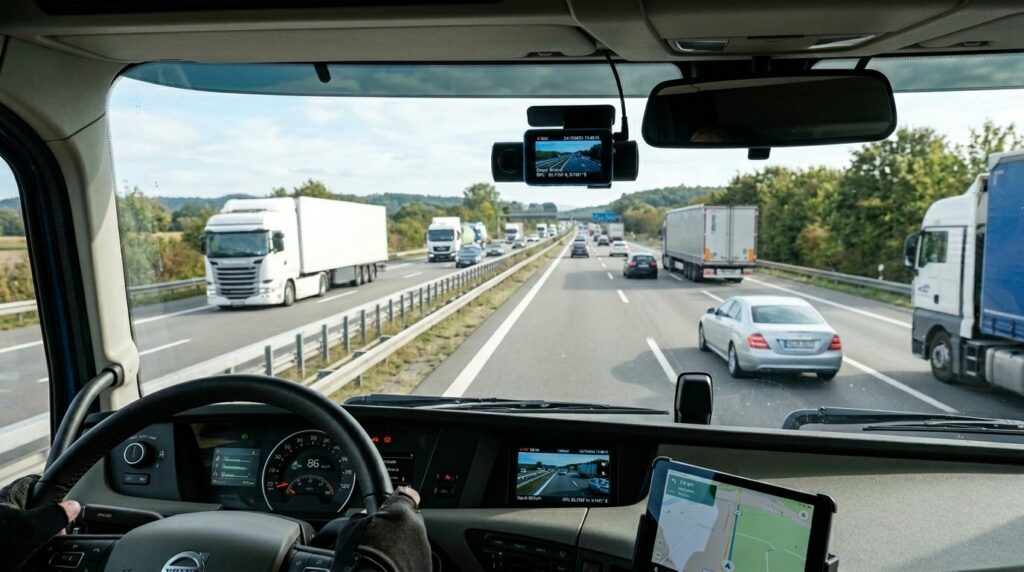
Modern commercial trucks are rolling data centers. They carry dashcams, GPS systems, electronic logging devices, and video telematics platforms that record nearly everything happening inside and outside the cab. When a crash occurs, this technology can capture the truth in a way that no human memory ever could.
For truck accident victims, this shift is significant. It means that the evidence needed to prove fault may already exist. The challenge is knowing what it is, where to find it, and how to use it before it disappears.
Key Takeaways
- Video telematics and dashcam systems in commercial trucks record driver behavior, vehicle speed, road conditions, and critical moments before and during a crash.
- This technology can confirm or contradict what a driver or trucking company claims happened, making it one of the most powerful tools in a truck accident case.
- Evidence from these systems is time sensitive and can be overwritten or deleted quickly, which is why acting fast and working with an experienced truck accident lawyer matters.
What Is Video Telematics and How Does It Work?
Video telematics is a technology system that combines GPS tracking, vehicle sensors, and camera footage into a single platform. Trucking companies use these systems to monitor their fleets in real time, track driver performance, and manage risk.
A basic dashcam records video from the front of the truck. A more advanced telematics system does much more. It may include inward-facing cameras that record the driver, outward-facing cameras that capture the road and surrounding traffic, sensors that detect hard braking, rapid acceleration, sharp turns, and lane departures, GPS data that logs the truck’s location, speed, and route, and alerts that flag risky driving behavior as it happens.
Some systems upload footage automatically to a cloud server. Others store data locally on the vehicle. Either way, the information captured by these systems can be extraordinarily detailed and, in a truck accident case, extraordinarily valuable.
What Dashcam and Telematics Evidence Can Show
When a crash occurs, the data captured by a commercial truck’s telematics system can answer questions that would otherwise be impossible to resolve.
- Speed at the time of impact. Was the truck traveling within the posted limit, or was the driver speeding? Telematics data provides an objective answer.
- Braking behavior. Did the driver attempt to stop before the collision? How much time passed between the moment of danger and the moment the brakes were applied?
- Driver distraction. Inward-facing cameras can show whether the driver was looking at the road, glancing at a phone, eating, or otherwise distracted in the moments before the crash.
- Driver fatigue. Camera footage combined with hours of service data can reveal whether a driver was showing signs of fatigue, such as drifting, slow reaction times, or microsleep.
- Lane position and traffic behavior. Outward cameras capture how the truck was positioned on the road, whether it drifted into another lane, and how it interacted with surrounding vehicles.
Each of these data points can directly support or undermine the claims made by the trucking company and its insurance team.
Why This Evidence Is So Powerful in Truck Accident Cases
Truck accident cases are rarely simple. Trucking companies have experienced legal teams, corporate insurance policies, and a strong financial incentive to minimize their liability. When a driver or company disputes fault, they often do so with confidence, knowing that victims may not have access to the same information they do.
Video telematics changes that dynamic. It creates an objective record that is difficult to argue against. A driver may claim they were not speeding. The telematics data may say otherwise. A company may insist their driver was alert and attentive. The inward camera footage may tell a different story.
This kind of evidence also carries significant weight with insurance adjusters, mediators, and juries. The video is compelling. It is concrete. It removes ambiguity from situations that might otherwise come down to one person’s word against another’s.
For truck accident victims, access to this evidence can mean the difference between a disputed claim and a clear path to full compensation.
How Trucking Companies Use This Technology Against You
It is important to understand that video telematics is not just a tool for victims. Trucking companies use it too, and not always in ways that benefit you.
Some companies review footage immediately after a crash and use it to build their own defense. If the footage shows something that helps their case, they may preserve it carefully. If it shows something that hurts them, they may argue it is irrelevant, claim it was not functioning properly, or allow it to be overwritten.
Trucking companies may also use telematics data to shift blame onto the victim. If the system captured footage of the moments before the crash, they may argue that your driving contributed to the collision. This is why having your own legal team involved early is so important. Your lawyer can request and secure this evidence before it is used against you or lost entirely.
The Time Sensitivity Problem
One of the most critical issues in truck accident cases involving telematics evidence is time. This data does not last forever.
Dashcam footage stored locally on the vehicle may be overwritten within days if the system loops continuously. Cloud-based footage may be deleted after a set retention period. GPS logs and sensor data may be purged in accordance with company policy. Physical damage to the truck can also affect the integrity of onboard systems.
Trucking companies are not always required to preserve this data indefinitely. Without a formal legal demand, they may allow it to disappear, whether intentionally or simply through routine data management.
This is why experienced truck accident lawyers act immediately. One of the first steps in any serious truck accident case is sending a legal preservation letter, sometimes called a spoliation letter, to the trucking company. This letter puts the company on notice that the evidence must be retained and that destroying it could have serious legal consequences.
At TruckWreck.com, victims are connected with lawyers who understand the urgency of evidence preservation and move quickly to protect the data that can win your case.

Other Electronic Evidence That Works Alongside Dashcam Data
Video telematics does not work in isolation. It is most powerful when combined with other forms of electronic evidence that modern commercial trucks generate.
- Event data recorders (black boxes) capture vehicle speed, braking force, throttle position, and impact data in the seconds before and during a crash.
- Electronic logging devices record driver hours, rest periods, and compliance with federal hours of service rules.
- GPS tracking systems log the truck’s route, speed, and location throughout the trip.
- Dispatch and communication records show what instructions the driver received, whether they were under pressure to meet a deadline, and how the company communicated with them before the crash.
Together, these data sources create a comprehensive picture of what the driver and trucking company were doing before, during, and after the collision.
How Telematics Evidence Is Used to Prove Fault
| Evidence Type | What It Captures | How It Proves Fault |
| Forward facing dashcam | Road conditions, traffic, crash sequence | Shows what the driver saw and how they responded |
| Inward facing camera | Driver behavior, distraction, fatigue | Reveals whether the driver was attentive |
| GPS data | Speed, route, location | Confirms whether the driver was speeding or off route |
| Event data recorder | Braking, throttle, impact forces | Provides objective crash data |
| Electronic logging device | Hours of service, rest periods | Shows fatigue or regulatory violations |
| Dispatch records | Instructions, pressure, communication | Reveals company role in driver behavior |
What Happens When Telematics Evidence Is Destroyed
If a trucking company destroys or allows evidence to be lost after receiving a preservation demand, courts can impose serious consequences. This is known as spoliation of evidence.
Depending on the circumstances, a judge may instruct the jury to assume that the destroyed evidence would have been unfavorable to the trucking company. This is called an adverse inference instruction, and it can significantly shift the dynamics of a case in the victim’s favor.
In some situations, the destruction of evidence can also support a claim for punitive damages, particularly if it can be shown that the company acted intentionally to conceal information.
This is another reason why early legal action is so important. The sooner a preservation demand is sent, the less opportunity the trucking company has to allow critical evidence to disappear.
What to Do After a Truck Accident to Protect This Evidence
If you are involved in a crash with a commercial truck, there are steps you can take right away to help preserve the evidence that may be critical to your case.
- Call law enforcement and request an official crash report. Note the name of the trucking company, the truck’s license plate, and any identifying information on the vehicle.
- Take photos and video of the scene, the vehicles, your injuries, and the surrounding area if you are physically able to do so.
- Identify and collect contact information from any witnesses who saw the crash.
- Seek medical care immediately, even if you feel fine. Some injuries are not immediately apparent, and a medical record from the day of the crash is important evidence.
Most importantly, contact a truck accident lawyer as soon as possible. The sooner legal action is taken, the better the chances of securing the dashcam footage, telematics data, and other electronic evidence that can prove what really happened.
Why Specialized Legal Representation Matters
Not every personal injury lawyer knows how to handle a truck accident case involving telematics evidence. Requesting and interpreting this data requires knowledge of how these systems work, what data they generate, and how to present it effectively in a legal context.
Trucking companies know this. They count on victims working with lawyers who are unfamiliar with the technology or who lack the resources to pursue it aggressively.
The lawyers connected through TruckWreck.com specialize in commercial truck accident cases. They understand how to secure telematics evidence, work with accident reconstruction experts, and build cases that hold trucking companies fully accountable. That specialized focus makes a real difference in the outcome of your case.
The Camera Does Not Lie
Dashcam footage and video telematics have fundamentally changed how fault is proved in commercial truck accident cases. For victims, this technology represents an opportunity to cut through the disputes and denials that trucking companies often rely on and get to the truth of what actually happened.
But this evidence only helps if it is preserved in time and used effectively. That requires fast action, legal knowledge, and a lawyer who understands the technology and knows how to fight for you.
If you or someone you love has been injured in a truck accident, do not wait. Reach out to TruckWreck.com for a free consultation. Call 1-800-834-0000 and connect with a truck accident lawyer who knows how to find the evidence, build the case, and fight for the compensation you deserve.
Frequently Asked Questions About Dashcam and Telematics Evidence in Truck Accidents
Q: Do all commercial trucks have dashcams and telematics systems?
A: Not all trucks are equipped with the same technology, but many commercial carriers use some form of dashcam or telematics system. Federal regulations require electronic logging devices on most commercial trucks, and many companies go further with full video telematics platforms.
Q: Can a trucking company delete dashcam footage after a crash?
A: They may attempt to, but doing so after receiving a legal preservation demand can constitute spoliation of evidence. Courts can impose serious penalties, including instructing juries to assume the destroyed evidence was harmful to the trucking company.
Q: How do I get access to dashcam footage from the truck that hit me?
A: You cannot request this directly. Your lawyer must send a formal preservation letter and, if necessary, use the legal discovery process to compel the trucking company to produce the footage.
Q: What if the dashcam was not working at the time of the crash?
A: If the system was malfunctioning, your lawyer will investigate whether the trucking company failed to maintain it properly. A non-functioning safety system can itself be evidence of negligence.
Q: How long does a trucking company have to keep dashcam footage?
A: Retention policies vary by company and system. Some footage is overwritten within days. This is why contacting a lawyer immediately after a truck accident is so important.
Q: Can telematics data be used against me as the victim?
A: In some cases, trucking companies may try to use data from the crash to argue that your driving contributed to the collision. Your lawyer will review all available evidence and counter any attempts to unfairly shift blame.
Q: Does telematics evidence always help the victim?
A: Not automatically. The evidence must be properly secured, interpreted, and presented. That is why working with a lawyer who has experience handling telematics evidence in truck accident cases is so important.
Created on 06-08-26