Reading Time: 7 minutes
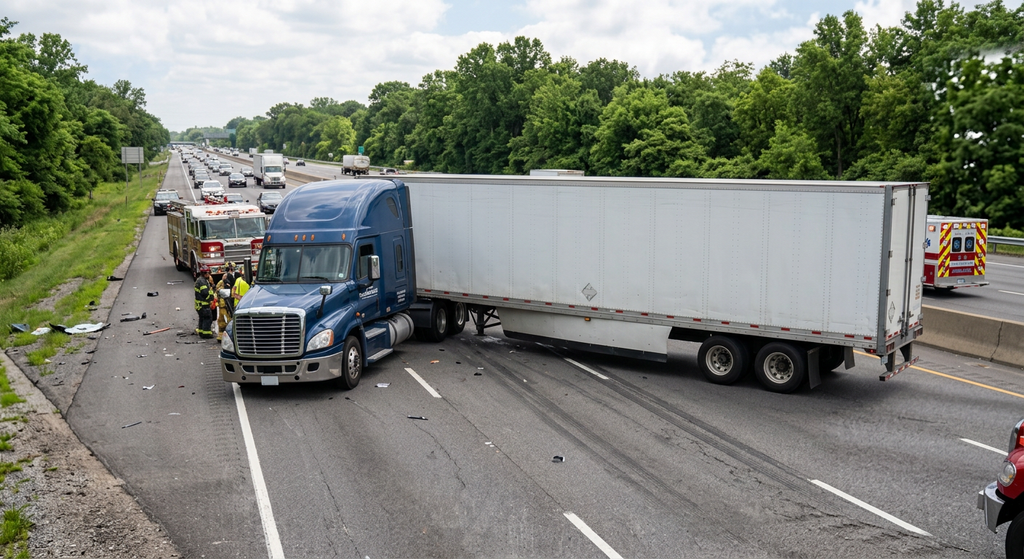
Few sights on the highway are as frightening as a large truck folding in on itself. The trailer swings out to one side while the cab points another way, forming a shape that looks like a folding pocket knife. This is a jackknife truck accident, and it is one of the most dangerous types of crashes on the road.
A jackknife accident can block multiple lanes, trigger chain reaction pileups, and cause catastrophic injuries in an instant. For anyone caught nearby, there is often little time to react.
Understanding what a jackknife truck accident is, what causes it, and who may be liable is important for anyone injured in one of these crashes. This guide breaks it all down in plain language and explains how victims can pursue the compensation they deserve.
Key Takeaways
- A jackknife truck accident happens when a truck’s trailer swings out and folds toward the cab, often blocking lanes and causing serious multi vehicle crashes.
- Common causes include speeding, hard braking, poor maintenance, bad weather, and driver error, and many of these point to driver or company negligence.
- Liability for a jackknife accident may fall on the driver, the trucking company, a maintenance provider, or others, which is why a thorough investigation is so important.
What Is a Jackknife Accident?
A jackknife accident occurs when a tractor trailer’s cab and trailer move at different angles until the trailer swings out to the side. The truck folds at the point where the cab and trailer connect, creating an angle that resembles a folding knife. This is where the term jackknife comes from.
When a trailer swings out of control, the driver often cannot correct it. The truck may slide sideways across multiple lanes, strike other vehicles, tip over, or spill its cargo. Because a fully loaded semi can weigh up to 80,000 pounds, the force involved is enormous.
Jackknife accidents are especially dangerous because they happen quickly and can involve many vehicles at once. A single jackknifed truck can shut down a highway and put dozens of drivers at risk in a matter of seconds.
What Causes a Truck to Jackknife?
Understanding what causes a truck to jackknife helps explain why these crashes so often trace back to negligence. Most jackknife accidents are not simply bad luck. They result from specific conditions or mistakes.
Speeding and Driving Too Fast for Conditions
Speed is one of the leading causes of jackknife accidents. When a truck moves too fast, especially on curves or in poor conditions, the trailer is more likely to lose traction and swing out. Driving too fast for rain, snow, or ice dramatically increases the risk.
Hard or Sudden Braking
Slamming on the brakes can cause the trailer’s wheels to lock up while the cab continues moving. This difference in motion can send the trailer sliding sideways. Sudden braking to avoid a hazard, or braking too hard on a slippery road, is a frequent cause of jackknifing.
Brake Problems and Poor Maintenance
Faulty or unevenly adjusted brakes can cause some wheels to lock before others, throwing the truck off balance. When a trucking company skips maintenance or ignores brake problems, it increases the chance of a jackknife. Maintenance records often reveal whether the equipment was properly cared for.
Improper Cargo Loading
A trailer that is overloaded, unbalanced, or improperly secured is harder to control. Shifting cargo can affect the truck’s stability and make jackknifing more likely, especially during braking or turning.
Bad Weather and Road Conditions
Rain, snow, ice, and slick roads reduce traction and make jackknifing far more likely. While weather itself is not negligence, drivers and companies are expected to adjust to conditions. Failing to slow down or operate safely in bad weather can be a form of negligence.
Driver Inexperience or Fatigue
Handling a heavy truck safely requires skill and alertness. An inexperienced or fatigued driver may brake too hard, misjudge a curve, or react poorly to a hazard, any of which can trigger a jackknife.
Common Causes of Jackknife Accidents at a Glance
| Cause | What Happens | Possible Negligence |
| Speeding | Trailer loses traction and swings out | Driver drove too fast for conditions |
| Hard braking | Trailer wheels lock and slide sideways | Driver braked improperly or too late |
| Brake problems | Wheels lock unevenly | Company skipped or ignored maintenance |
| Improper loading | Shifting cargo destabilizes the truck | Cargo loaded unsafely or unsecured |
| Bad weather | Reduced traction on slick roads | Failure to adjust speed to conditions |
| Driver fatigue or inexperience | Poor reactions and judgment | Company scheduling or training failures |
Who Is Liable for a Jackknife Accident?
Determining who is liable for a jackknife accident depends on what caused the truck to jackknife in the first place. In many cases, more than one party shares responsibility. Here are the parties who may be held liable.
The Truck Driver
If the driver was speeding, braking improperly, driving while fatigued, or operating carelessly for the conditions, they may be liable for the crash. Driver error is one of the most common causes of jackknife accidents.
The Trucking Company
Trucking companies can be held responsible in several ways. If the company failed to maintain the truck, set unrealistic schedules that pushed the driver to speed or drive fatigued, hired an unqualified driver, or provided inadequate training, its own negligence may have contributed to the crash. Companies can also be responsible for the actions of their drivers.
A Maintenance or Repair Provider
If a third party was responsible for maintaining or repairing the truck’s brakes or other critical systems, and did so improperly, that provider may share liability. A brake failure caused by faulty repair work can point directly at the company that performed it.
A Cargo Loading Company
When a separate company is responsible for loading the trailer, and improper or unbalanced loading contributed to the jackknife, that company may be liable. Shifting or overloaded cargo is a known cause of loss of control.
A Parts Manufacturer
If a defective part, such as a faulty brake component, caused the truck to jackknife, the manufacturer of that part could be held responsible under product liability principles.
Why Jackknife Accident Cases Are Complex
Jackknife accidents often involve multiple vehicles, serious injuries, and several potentially liable parties. Sorting out exactly what happened, and who is responsible, requires a careful investigation.
Much of the evidence needed to prove liability is controlled by the trucking company. This includes maintenance records, driver logs, electronic logging data, black box information, and cargo loading documentation. This evidence can show whether the truck was properly maintained, whether the driver was fatigued or speeding, and whether the cargo was loaded safely.
The problem is that this evidence is often time sensitive. Records have retention limits, and data can be overwritten or lost if action is not taken quickly. Trucking companies also tend to focus blame on other drivers or on the weather to avoid responsibility.
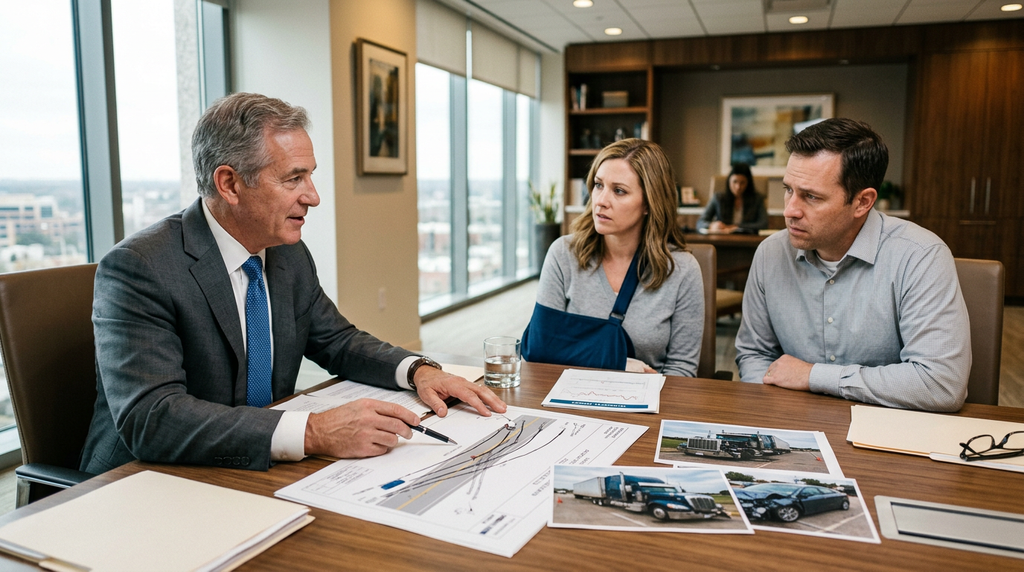
An experienced truck accident lawyer can move quickly to preserve evidence, identify every liable party, and build a strong case. Without this kind of investigation, victims may struggle to prove what really caused the crash.
At TruckWreck.com, victims are connected with truck accident lawyers who understand how to investigate jackknife crashes and hold the right parties accountable. Call 1-800-834-0000 for a free consultation.
What to Do If You Are Injured in a Jackknife Accident
If you are involved in a jackknife truck accident, the steps you take can protect both your health and your legal rights.
First, prioritize safety and medical care. Get to a safe location if you can, call for help, and get evaluated by a medical professional even if you feel okay. Some serious injuries do not show symptoms right away.
If you are able, document the scene. Photograph the vehicles, the position of the truck and trailer, road and weather conditions, and any visible injuries. Collect contact information from witnesses and the truck driver.
Do not give a recorded statement to the trucking company’s insurer before speaking with a lawyer. Keep any conversation brief and consult legal counsel first.
Contact a truck accident lawyer as soon as possible. Because jackknife cases involve time sensitive evidence and multiple potential parties, early legal action is critical to protecting your claim.
Get the Answers You Deserve
A jackknife truck accident is a terrifying and often devastating event. When a massive trailer swings out of control, the consequences can be life changing for everyone involved. But these crashes are rarely random. Most trace back to speeding, hard braking, poor maintenance, unsafe loading, or company decisions that put safety second.
Figuring out who is liable for a jackknife accident takes a careful investigation and access to evidence that the trucking company would rather keep hidden. That is why experienced legal help matters so much.
If you or a loved one has been injured in a jackknife truck accident, do not face it alone. Reach out to TruckWreck.com for a free consultation. Call 1-800-834-0000 and connect with a truck accident lawyer who will investigate the crash and fight for the compensation you deserve.
Frequently Asked Questions
What is a jackknife truck accident?
A jackknife truck accident happens when a tractor trailer’s trailer swings out to the side and folds toward the cab, forming an angle like a folding knife. The truck can slide across lanes, strike other vehicles, and cause serious multi vehicle crashes.
What causes a truck to jackknife?
Common causes include speeding, hard or sudden braking, faulty brakes, improper cargo loading, bad weather, and driver fatigue or inexperience. Many of these point to driver or company negligence.
Who is liable for a jackknife accident?
Liability may fall on the truck driver, the trucking company, a maintenance provider, a cargo loading company, or a parts manufacturer, depending on what caused the crash. In many cases, more than one party shares responsibility.
Is the weather ever to blame for a jackknife accident?
Weather can contribute, but drivers and companies are expected to adjust to conditions. Failing to slow down or operate safely in rain, snow, or ice can still be a form of negligence even when weather played a role.
What evidence is important in a jackknife accident case?
Key evidence includes maintenance records, driver logs, electronic logging data, black box information, cargo loading documentation, and witness statements. Much of this is controlled by the trucking company and can be time sensitive.
How soon should I contact a lawyer after a jackknife accident?
As soon as possible. Critical evidence can be lost or overwritten within days. Early legal action allows a lawyer to preserve evidence, identify all liable parties, and protect your claim.
Created on 10-05-26